Our 5-Step Decorating Process
We don't just paint over problems. We follow a strict 5-step protocol on every residential project to guarantee a flawless, long-lasting finish.
Detailed Survey
We assess substrate conditions, check for damp, and provide a completely transparent, fixed-price written quotation.
Absolute Protection
Before opening a single tin of paint, we mask all hard floors with correx and cover furniture with clean, static dust sheets.
Dust-Free Prep
We use Festool M-class dust extraction sanders. This removes 99.9% of dust at the source, creating perfectly smooth surfaces without the mess.
Premium Coating
We apply high-opacity primers and luxury topcoats (from brands like Little Greene or Farrow & Ball) using professional trade techniques.
Final Snagging
We perform a rigorous quality check under halogen lighting, clean up entirely, and invite you for a final walk-through.
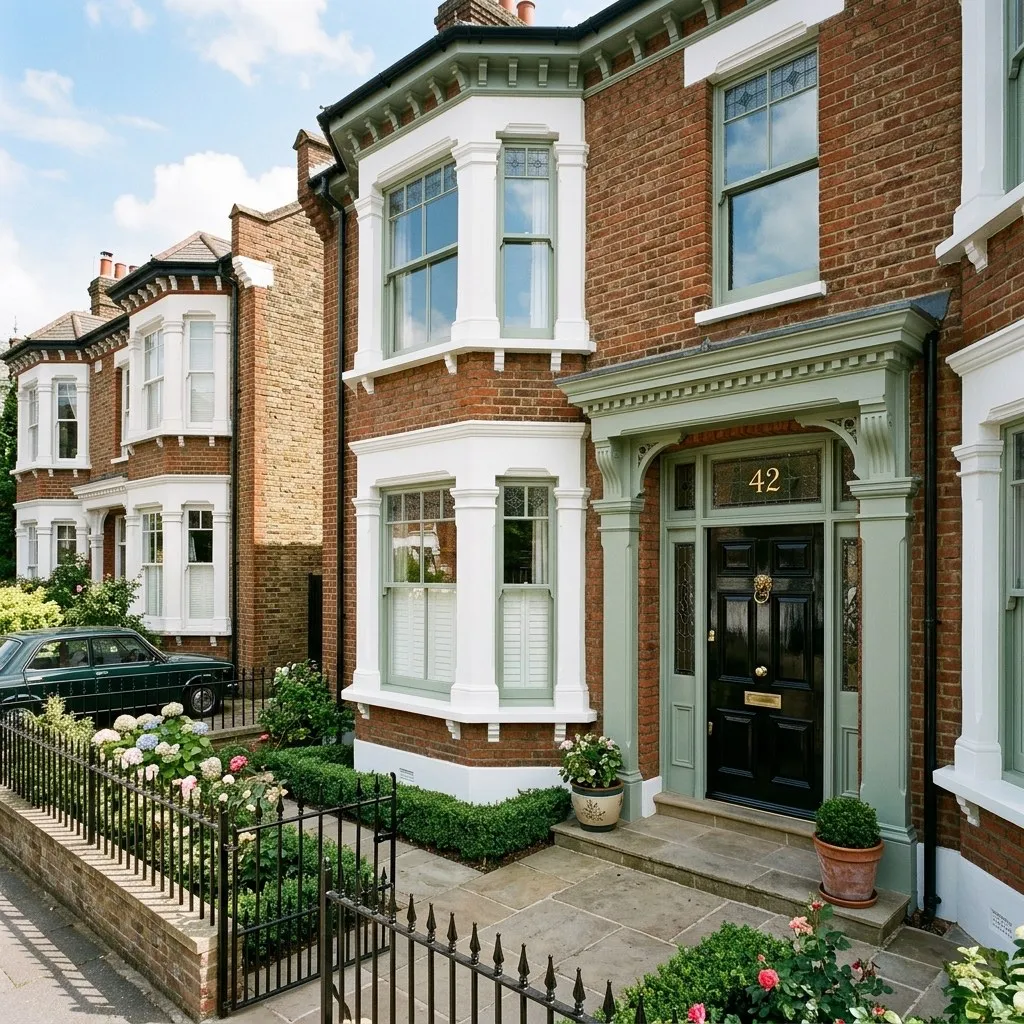
Our Exterior Painting Process
Exterior coatings are affected by rain, temperature, sunlight, moisture movement, and the condition of the substrate. The six stages below explain the checks and preparation that may be required before a suitable coating system can be quoted.
Step 1: External Survey & Scaffolding Assessment
The first step is an external survey for paint failure, timber rot, cracked render, damp ingress, and biological growth such as algae or lichen. Access requirements and possible lead coatings on older properties also need to be considered. If scaffold or specialist remediation is required, the quote should identify who will arrange it and how it affects the cost.
Step 2: Pressure Washing & Surface Cleaning
All exterior surfaces are pressure washed using a professional Kärcher unit to blast away years of accumulated dirt, grime, moss, and loose material. For surfaces with persistent algae or green biological growth — a common problem on north-facing elevations across Hitchin and Stevenage — we apply a specialist anti-fungal biocidal wash and allow it to dwell before rinsing. This kills spores at the root, preventing regrowth beneath the new paint film. Surfaces are then left to dry thoroughly before any coatings are applied.
Step 3: Timber Repairs & Rot Treatment
Rotten or damaged timber — whether on window sills, fascia boards, barge boards, or door frames — is carefully assessed. Minor rot is treated with a liquid wood hardener to consolidate the fibres, then rebuilt using a two-part epoxy repair system such as Timbabuild Dry Flex. This is a durable, sandable compound that bonds permanently to the surrounding timber and can be painted over within hours. Where damage is too extensive for repair, we splice in new pressure-treated softwood or hardwood sections. For comprehensive sash window restoration, see our detailed guide: How to Restore Sash Windows.
Step 4: Masonry Crack Repair & Stabilisation
Cracks in rendered walls, pebbledash, or exposed brickwork are raked out and filled with appropriate repair mortars or flexible fillers. Loose or blown render is hacked off and patched with a sand-and-cement mix matched to the existing texture. For chalky, powdery, or friable masonry — where the surface crumbles when touched — we apply Sandtex Stabilising Solution, a penetrating liquid that soaks into the substrate and binds loose particles together, creating a solid foundation for paint. This level of thorough preparation is especially important for the older period properties we decorate in St Albans and Harpenden. Without this step, topcoats simply peel away within a season or two.
Step 5: Priming
Correct priming is the bridge between preparation and a lasting finish. On bare masonry, we use Dulux Weathershield Stabilising Primer to seal the surface and improve topcoat adhesion. On areas where old paint is flaking or the substrate varies between painted and bare patches, Zinsser Peel Stop is our go-to — a flexible, elastic primer that bridges hairline cracks and creates a uniform base. All bare timber and repaired woodwork receives a dedicated exterior wood primer before topcoating. We never skip this step, even when manufacturers claim their topcoats are "self-priming."
Step 6: Topcoats — Built to Last
The topcoat must be compatible with the substrate, primer, existing coating, exposure, and desired sheen. Masonry and exterior woodwork need different systems. The written quote should identify the proposed products, number of coats, coverage assumptions, and drying conditions, with application following the current manufacturer instructions.
Exterior Services:
- ✓Render & Pebbledash Painting
- ✓Sash Window Woodwork Restoration
- ✓Front Door High-Gloss Painting
- ✓Fascias, Soffits & Bargeboards
- ✓Guttering & Downpipes Painting
- ✓Fences, Gates & Garden Decking
Need an exterior inspection?
Book Free VisitWhen Is the Best Time to Paint Your House Exterior?
Timing matters enormously for exterior decorating. In the UK, the ideal window runs from late April through to early October, when temperatures consistently sit above 10°C and there's enough daylight for proper drying between coats. Painting too early in spring risks damp substrates from winter moisture, while painting too late in autumn means shorter days, heavier dew, and the risk of frost damaging fresh coatings overnight.
That said, preparation work — pressure washing, timber repairs, crack filling, and priming sheltered areas — can often be carried out during the cooler months, so that when the weather improves, we can move straight to topcoating with minimal delay. This approach is particularly useful if you're planning a full property repaint and want to spread the work over several visits.
For a more detailed breakdown of seasonal considerations, read our blog post: Best Time for Exterior Painting in the UK.
Instant Estimate Calculator
Find out how much your project might cost in seconds.
What do you need painted?
Interior Painting
Exterior Painting
Kitchen Cabinets
Interior Project Details
Exterior Property Size
Terraced House
Semi-Detached
Large Detached
Kitchen Size
Your Estimate is Ready! 🎉
Where should we send your price estimate and free guide to choosing paint?
Calculating your exact estimate...
Timeline & Investment
Exterior projects vary considerably depending on property size, access requirements, and the condition of existing surfaces. These ranges reflect typical costs for well-maintained properties in Welwyn Garden City and Hatfield. We provide detailed, itemised quotes after our free external survey.
Front Elevation
£800 – £1,500
Typical duration: 2–3 days
Includes pressure washing, preparation, two coats of masonry paint on front-facing walls, and full redecoration of front-facing woodwork (windows, door frame, fascia). Price assumes a standard two-storey semi-detached or terraced property accessible from ladders. Scaffolding, if required, is quoted separately based on the scaffolding contractor's survey.
Full House Exterior
£2,500 – £5,000
Typical duration: 5–10 days
Covers all elevations — front, rear, and sides. Includes comprehensive pressure washing, timber repairs, crack filling, stabilising, priming, and two coats of masonry paint plus full woodwork redecoration. Price varies depending on property size, number of windows, access complexity, and extent of preparation work required. Detached properties and those with significant timber features will sit towards the upper end.
Price ranges are indicative only. The written quote will state whether materials, labour, VAT, access equipment, scaffolding, and repairs are included.
Exterior Painting FAQs
How long does exterior paint last?
Service life varies with exposure, substrate condition, moisture, preparation, paint system, and maintenance. Manufacturer guidance should be checked for the selected product, and no lifespan should be promised before the surface has been inspected.
Do you provide scaffolding?
Access requirements are assessed before quoting. Whether your property is in North London or Hertford, if scaffolding or a tower is needed, the quote should state who will arrange it, what it costs, and which elevations it covers before work is booked.
Can you paint pebbledash?
Pebbledash can often be painted, but it first needs checking for loose aggregate, cracks, contamination, chalking, and damp. Cleaning, stabilising, repairs, application method, and paint quantity depend on its condition and texture.
What if it rains?
We monitor weather forecasts closely and only apply exterior coatings when conditions are suitable — typically above 10°C with no rain expected for at least four hours. Most quality masonry paints are rain-resistant within one to two hours of application, but we prefer a comfortable drying window. If rain is forecast, we use the time productively for preparation work such as sanding, filling, priming sheltered areas, or timber repairs under covered sections.
Do I need planning permission to change my house colour?
Routine painting is often treated as maintenance, but a colour change can still require checks where a property is listed, affected by an Article 4 direction, subject to lease restrictions, or covered by a local scheme. For local examples, read our Welwyn Garden City front door and exterior colour guide, then confirm the exact address and proposed work with the relevant authority before making a material external change.
Protect & Transform Your Property's Exterior
Don't wait for peeling paint or rot to become a costly repair. Book a free external survey and we'll assess your property, recommend the right coatings, and provide a detailed, no-obligation quote.
Book Your Free SurveyCall 07930 097259Need work inside? We also offer premium interior painting and expert wallpaper hanging.