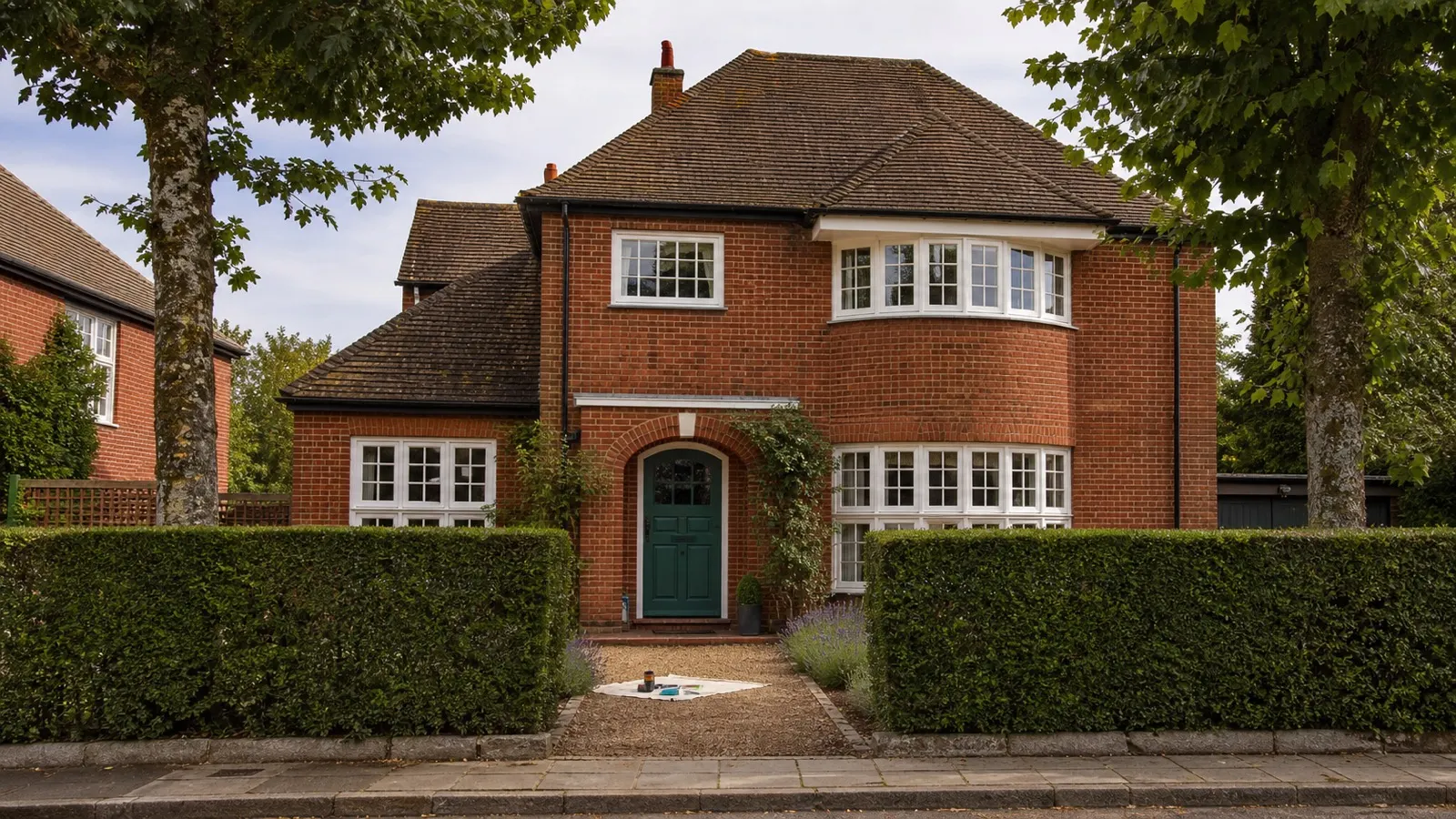
Best Time to Paint a House Exterior in the UK: Weather & Temperature Guide
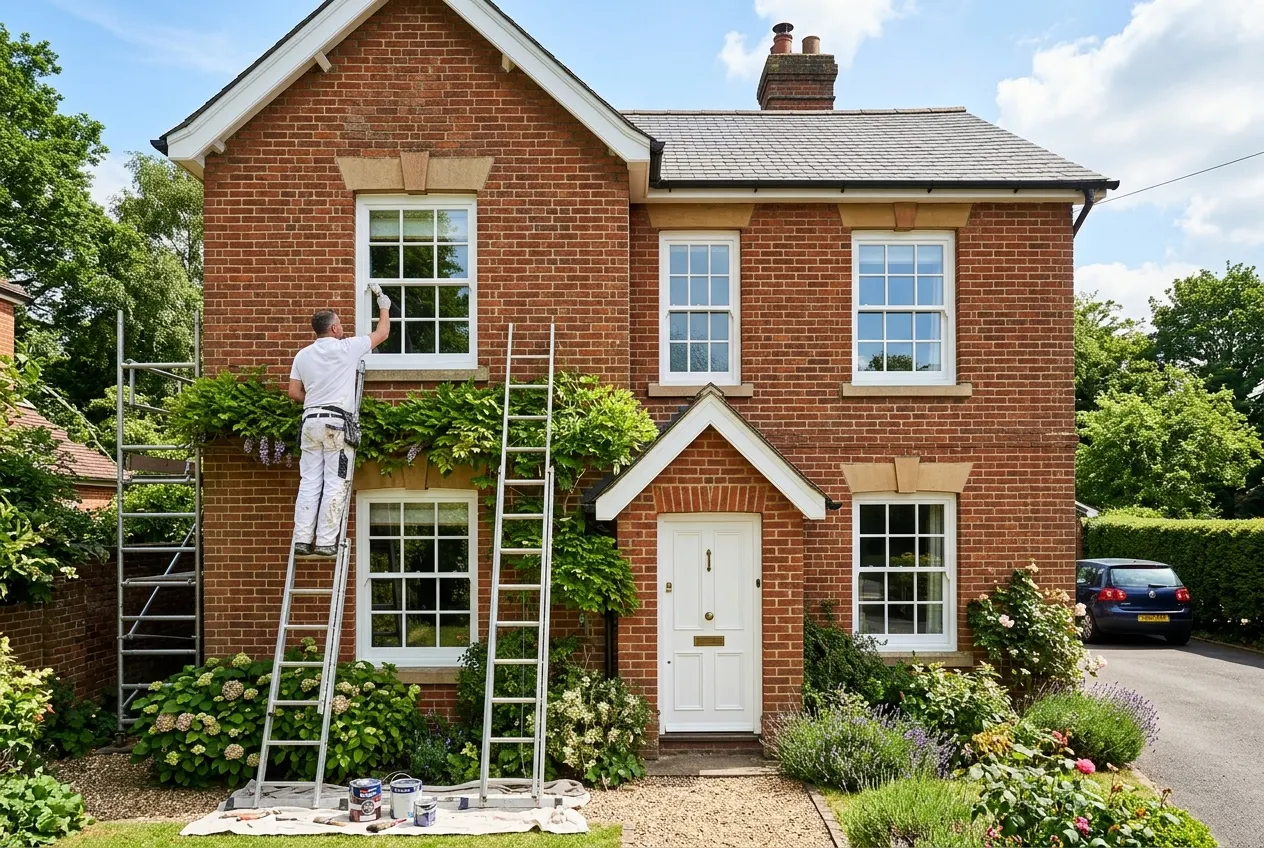
Exterior painting is one of the most effective ways to transform your property’s kerb appeal while protecting it from the harsh elements. Whether you are refreshing the masonry on a mock-Tudor property in Welwyn Garden City, protecting the timber sash windows of a Victorian terrace in St Albans, or repainting rendered walls in North London, the key to a long-lasting finish lies in the timing.
Unlike interior decorating, which can be done year-round in a climate-controlled environment, exterior painting is completely dependent on the weather.
Applying paint in cold, damp, or overly hot conditions will compromise the paint’s bond, leading to bubbling, cracking, and peeling within months. In the UK, with our notoriously unpredictable climate, understanding the exact weather windows and exterior painting temperatures is critical. This guide outlines the key scientific factors that govern paint drying, provides a month-by-month planning guide, and answers common questions like whether you can paint outside in winter in the UK.
Core Weather Variables & Exterior Painting Temperatures in the UK
Before planning an exterior project or booking a decorator, you need to understand the four primary weather elements that determine whether paint will dry and cure correctly.
1. Temperature (Minimum & Maximum)
Paint is a complex chemical emulsion. In order to dry, the liquid carrier (water or solvent) must evaporate, allowing the binders and pigments to fuse together to form a continuous, durable film.
- Minimum Temperature: Most standard water-based exterior paints (such as Dulux Weathershield or Johnstones Stormshield) require a minimum temperature of 10°C to cure. If the temperature falls below this, the paint film cannot form properly, resulting in a weak, powdery finish that washes away easily. While some specialized oil-based wood paints can be applied at 5°C, higher temperatures are always safer.
- Maximum Temperature: Conversely, painting in extreme heat (above 30°C–35°C) is also problematic. If the substrate is too hot, the paint will dry almost instantly upon application. This prevents the paint from leveling out, resulting in ugly brush marks, roller lines, and poor adhesion.
2. Relative Humidity (RH)
Humidity refers to the amount of moisture in the air.
- High humidity slows down the evaporation of water from water-based paints.
- The Rule of Thumb: Exterior painting should only be carried out when the relative humidity is below 80%. If the humidity is higher, the paint remains wet for too long, exposing it to rain wash-offs, insects, dust, and morning dew.
3. Surface Moisture & The Dew Point
Paint will not stick to a damp surface. Moisture trapped under a paint film on brickwork or timber will expand when warmed by the sun, causing the paint to blister, bubble, and peel.
- Timber Moisture: Before painting timber window frames, the wood’s moisture content should ideally be below 15%–18%.
- The Dew Point: The dew point is the temperature at which air moisture condenses into water droplets. If the temperature of the wall or wood surface drops close to the dew point (common in early morning and late afternoon), condensation will form on the fresh paint, ruining the gloss level and drying process.
4. Wind Speed
A light breeze helps paint dry by carrying away evaporating moisture. However, high winds can dry the paint too quickly, causing it to skin over before the lower layers have dried. Additionally, strong winds blow dust, leaves, pollen, and insects onto the wet paint, spoiling the finish.
Month-by-Month Guide to Exterior Painting in the UK
Due to our maritime climate, the UK exterior painting season is relatively short, typically spanning from late April to early October.
April to May (Spring) — Very Good
Spring is a popular and effective window for exterior work.
- Pros: Temperatures are rising comfortably above 10°C, daylight hours are increasing, and timber is beginning to dry out after the winter cold.
- Cons: Spring showers can be frequent. Masonry must be given at least 24–48 hours of dry weather to dry out completely before painting can begin.
June to August (Summer) — Peak Season
This is the most reliable time of year for dry conditions and warm temperatures.
- Pros: Long daylight hours allow decorators to work efficiently. Warm, dry air ensures rapid curing of masonry and trim paints.
- Cons: Summer heatwaves can make surfaces too hot to paint. Professional decorators will “follow the shade,” painting on the side of the house away from direct midday sun to prevent the paint from drying too quickly.
September to October (Autumn) — The Final Window
Early autumn offers a final opportunity for exterior projects.
- Pros: The air is often dry and warm, and late-summer heatwaves have subsided.
- Cons: Morning dew becomes a significant factor. Work must often start later in the morning to allow the sun to dry the surface condensation. By mid-October, overnight temperatures regularly drop below 8°C, and relative humidity rises, effectively closing the standard painting season.
November to March (Winter) — Not Recommended
Standard exterior painting should not be attempted during the UK winter.
- The Risk: Persistent dampness, low temperatures, and frost will prevent paint from drying, causing it to run, wash off, or fail prematurely.
- Exceptions: Emergency timber repairs or rot treatments (such as Timbabuild resin repairs) can be carried out using specialized low-temperature resins, provided the area is protected by temporary sheeting or wraps.
Quick Reference: UK Exterior Painting Conditions by Month
| Month | Avg. Temp | Humidity | Can You Paint? | Notes |
|---|---|---|---|---|
| January | 2–7°C | 85%+ | ❌ No | Too cold, too damp. |
| February | 2–8°C | 80%+ | ❌ No | Frost risk overnight. |
| March | 4–10°C | 75–85% | ⚠️ Risky | Only with Pliolite paints (e.g. Sandtex 365). |
| April | 7–13°C | 65–75% | ✅ Yes | Good window. Watch for spring showers. |
| May | 10–17°C | 60–70% | ✅ Yes | Excellent. Long daylight hours. |
| June | 13–20°C | 55–65% | ✅ Peak | Best month for exterior painting. |
| July | 15–23°C | 55–65% | ✅ Peak | Watch for heatwaves (paint in shade). |
| August | 15–22°C | 55–70% | ✅ Peak | Reliable dry conditions. |
| September | 12–19°C | 65–75% | ✅ Yes | Morning dew — start work after 10am. |
| October | 8–14°C | 75–85% | ⚠️ Risky | Last chance. Nights drop below 8°C. |
| November | 5–10°C | 85%+ | ❌ No | Season closed for standard paints. |
| December | 3–8°C | 85%+ | ❌ No | Emergency repairs only. |
Temperatures are averages for South-East England / Hertfordshire. Northern regions will be 1–3°C cooler.
Choosing the Right Paint for the Weather
To combat the unpredictable UK weather, paint manufacturers have developed specialized coatings:
- Standard Acrylic Masonry Paints: (e.g., Dulux Weathershield). Best used in warm, dry summer months. Offers excellent breathability and flexibility.
- All-Weather Pliolite Masonry Paints: (e.g., Sandtex 365). These solvent-based coatings can be applied at temperatures as low as -5°C and are rainproof in as little as 20 minutes, making them ideal for early spring or late autumn applications.
- Self-Priming Wood Systems: (e.g., Sadolin Superdec or Little Greene Intelligent Exterior Eggshell). Extremely flexible coatings that expand and contract with timber window frames, preventing cracking during seasonal temperature shifts.
Frequently Asked Questions (FAQs)
Can you paint exterior masonry in the rain?
No. You should never apply paint while it is raining. Rain will wash fresh water-based paint straight off the walls. If you are using solvent-based paint, the rain will prevent the paint from adhering to the substrate, leading to immediate blistering and peeling.
How long does a wall need to dry after it rains?
As a general rule, brickwork or render needs at least 24 to 48 hours of dry, sunny weather to dry out completely after heavy rain. If you paint over masonry that looks dry on the surface but is still damp inside, the moisture will eventually try to escape, pushing the paint film off the wall.
What happens if it rains shortly after painting?
If it rains within 2 to 4 hours of application, standard water-based masonry paint can wash off or develop run marks. If this happens, the affected area must be allowed to dry, sanded back lightly, and repainted. Specialized quick-drying or pliolite paints are rainproof in 20–30 minutes and can withstand sudden showers.
Do you need scaffolding to paint a house exterior?
For safety and quality, most properties require scaffolding or stable access towers to paint dormers, gables, and first-floor sash windows. At Screpy Decorators, we can arrange and coordinate scaffolding as part of our comprehensive exterior painting service.
How long does professional exterior paint last in the UK?
A high-quality, professionally applied exterior paint job using premium trade materials should last between 5 to 10 years. The lifespan depends on the exposure of the property (coastal or south-facing walls wear faster), the quality of the preparation, and the type of paint used.
Plan Your Exterior Project Early
Because the UK weather window is short, professional exterior painters book up months in advance. If you are looking to protect and beautify your home, we recommend requesting quotes in early spring to secure a slot during the dry summer months.
Screpy Decorators provides fully insured exterior house painting, sash window restoration, and timber rot treatment across Welwyn Garden City, St Albans, Hatfield, Stevenage, Hertford, and North London.
Contact us today to arrange your free, no-obligation site survey or call us on 07930 097259.
About the Author: Screpy Decorators
Screpy Decorators publishes practical guidance on preparation, paint systems, wallpaper calculations, and planning decorating work in Hertfordshire.
Planning a Decorating Project?
Get a precise, itemized written quotation for your home or business premises in Welwyn Garden City, Hatfield, or St Albans.