Welwyn Garden City Front Door Painting Rules
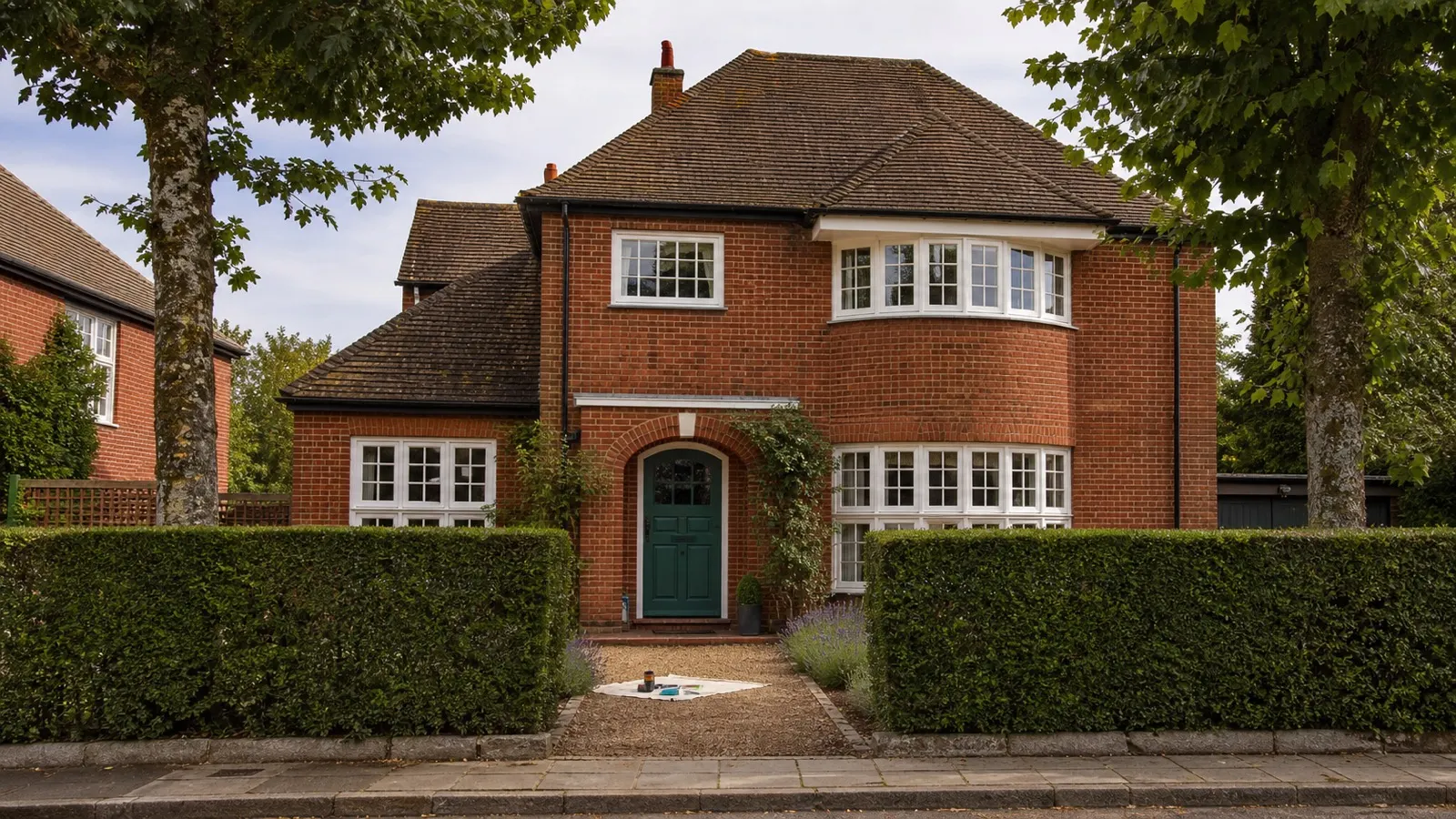
A new front door colour can change the whole character of a house. In Welwyn Garden City, however, the first question is not simply whether deep green, navy or warm red suits the brickwork. It is whether the property is covered by a local control and whether the proposed work changes its external appearance.
That question is easy to get wrong because several different systems can apply. The Welwyn Garden City Estate Management Scheme, conservation-area planning controls and listed-building rules are related to heritage, but they are not interchangeable. A house can be affected by more than one of them, and a neighbour’s previous project is not proof that the same work is acceptable at your address.
This guide explains the checks to make before painting a front door, windows, render or other exterior surfaces. It is practical decorating guidance, not a determination that consent is or is not required for a particular property. For a project-specific answer, use the council’s current maps and obtain written advice where necessary.
The short answer
Routine repainting is often treated differently from a material change to a building. The national Planning Portal guidance for external walls says repairs, maintenance and minor improvements such as painting a house do not normally require planning permission. It also warns that listed buildings and properties in designated areas can be subject to additional controls.
Welwyn Garden City adds another local consideration. Welwyn Hatfield Borough Council says the Estate Management Scheme covers most of the town and that consent may be needed before changing a home or garden.
The sensible working rule is:
- Repainting the same surface in a closely matching colour is generally lower risk than changing the appearance.
- Introducing a strong new colour, painting a previously unpainted surface or changing materials deserves a check before work starts.
- Listed buildings, flats, converted houses and commercial premises need particular care because ordinary householder rights may not apply in the same way.
- Estate Management consent and planning permission are separate questions. Needing one does not automatically answer whether the other is required.
Why Welwyn Garden City is different
Welwyn Garden City was planned as a coherent town rather than assembled street by street without an overall design. The relationship between houses, trees, hedges, verges and open space is a large part of its identity. Repeated materials and restrained exterior details help individual homes read as part of a wider street.
The council’s Welwyn Garden City Conservation Area Appraisal records the architectural and historic character that conservation policies seek to protect. Separately, the Estate Management Scheme exists to protect the environment and heritage of much of the town.
This does not mean every front door must be identical or that one universal list of permitted paint colours applies to every property. We could not find a current council source supporting internet claims that every window must be white or that a named set of retail paint colours is automatically approved. Treat those claims cautiously. The appropriate finish depends on the property, its established appearance, its location and the controls that apply to it.
Four checks to make before choosing a colour
1. Is the property inside the Estate Management Scheme?
Start with the council’s Estate Management Scheme page and its linked map. The council states that the scheme covers most, rather than all, of Welwyn Garden City. Do not rely only on the postcode or on what a previous owner remembers.
If the property is covered, read the current design guide and check whether the proposed colour or treatment counts as an alteration to the external appearance. The council also publishes an Estate Management validation checklist, which shows that external alterations may require existing and proposed elevations and supporting information.
2. Is it in a conservation area?
Conservation-area status does not make ordinary maintenance impossible. It does mean that the effect on local character matters and that some permitted development rights can be restricted. Painting a previously unpainted façade, changing cladding or making a conspicuous alteration is not equivalent to refreshing an existing coating.
Check the current council mapping and any Article 4 direction affecting the address. Article 4 directions can remove rights that would otherwise allow certain changes without a planning application.
3. Is the building listed?
A listed building requires a different level of care. The Planning Portal advises that significant work to a listed building may require listed building consent, internally or externally. The significance of the door, ironmongery, glazing, joinery and existing paint system may all matter.
Do not sand historic joinery aggressively or replace original details before obtaining appropriate advice. A decorating quotation should distinguish between cleaning, local repair, preparation and alteration.
4. Is it actually a house?
Flats, converted houses, maisonettes and commercial buildings do not necessarily benefit from the same permitted development rights as a single dwellinghouse. Lease conditions or freeholder approval may also apply. If the entrance is part of a shared elevation, confirm responsibility before arranging work.
Front door colour: a practical decision table
The table below is a risk-screening tool, not formal consent. It helps identify when a quick written check is worthwhile.
| Proposed work | Relative risk | What to check first |
|---|---|---|
| Recoat the door in the existing colour | Lower | Confirm the substrate and whether any listed-building or lease restriction applies |
| Change from one restrained traditional colour to another | Medium | EMS coverage, conservation status and the council’s current design guidance |
| Use a very bright, metallic or visually dominant finish | Higher | Seek written advice before buying materials or booking labour |
| Paint a previously unpainted timber door | Medium | Whether the natural finish contributes to the building’s established character |
| Paint brick, stone or another previously unpainted façade | Higher | Planning, conservation, EMS and moisture implications |
| Replace the door, glazing or ironmongery as well as painting | Higher | The design, proportions, materials and any consent requirements |
Choosing a colour that belongs to the house
Colour should be assessed in daylight, against the permanent materials around it. A shade viewed on a phone or under shop lighting can behave very differently beside red brick, pale render, roof tiles and mature planting.
For many Garden City homes, restrained deep greens, muted blues, warm off-whites, dark reds and near-black tones can provide a useful starting point for samples. They are not a council-approved list. The same colour can look balanced on one elevation and overly dominant on another.
Before committing:
- Paint two sample boards with the intended primer, undercoat and finish.
- Place them vertically beside the door during morning and afternoon light.
- View them from the pavement as well as close up.
- Compare the colour with the brick, render, windows, rainwater goods and neighbouring entrances.
- Record the manufacturer, product, colour reference and sheen for future maintenance or a consent query.
Gloss, satin and eggshell do not produce the same visual result even when the colour reference is identical. A high sheen reflects sky and greenery, while a lower sheen can appear quieter but may offer different durability and cleaning characteristics. Select the paint system for the door material and exposure, not for colour alone.
Our comparison of Farrow & Ball and Little Greene explains some of the practical differences between premium paint ranges. Equivalent colours should still be sampled because tint bases, sheen and surrounding materials influence the final result.
Preparation matters more than the colour name
A front door can look newly painted for a few weeks and still fail early if preparation was rushed. South- and west-facing entrances receive more sun and weather; sheltered doors can remain damp around lower rails and thresholds.
A sound exterior door-painting specification normally considers:
- adhesion of the existing coating;
- open joints, cracks and movement around panels;
- moisture entry at glazing and mouldings;
- exposed end grain and the bottom edge of the door;
- resin, rust staining or previous incompatible coatings;
- suitable primer for bare timber, metal or composite material;
- drying conditions between coats;
- seals, locks, hinges and weather strips that must remain functional.
Mechanical sanding should be controlled, particularly on older coatings. If there is a possibility of lead-containing paint, stop and use an appropriate testing and containment method rather than creating uncontrolled dust.
For wider work, our guide to exterior painting in Hertfordshire explains how masonry, timber and metal need different preparation. Weather also matters: the best time to paint a house exterior in the UK depends on the coating’s temperature and moisture requirements, not simply the month shown on the calendar.
Do not paint sound brick just to modernise it
Painting previously unpainted brick is a much larger decision than repainting a door. It changes the building’s appearance, introduces a long-term maintenance cycle and can complicate moisture movement if the wrong system is applied.
Once brick has been coated, returning it to its original appearance can be difficult and abrasive removal can damage the face. Where brick is stained or locally repaired, cleaning, mortar work or targeted repair may be more appropriate than covering the entire elevation.
The same caution applies to render and pebbledash. First-time painting, a major colour change and replacement of one finish with another should be checked before work begins. Existing painted render also needs inspection for hollow areas, cracks, salts, algae and failed previous coatings.
What information to send when asking for advice or a quote
A useful enquiry is specific enough for the council, freeholder or decorator to understand what will actually change. Include:
- the full property address;
- clear photographs of the whole front elevation and close views of the door;
- whether the surface is timber, metal, composite, brick or render;
- the existing colour and proposed colour;
- product name, colour reference and sheen where known;
- whether any joinery, glazing or ironmongery will be replaced;
- whether the surface has previously been painted;
- any known planning, listed-building, conservation or EMS reference.
For a decorating quotation, photographs are useful but they do not always reveal moisture, adhesion failure or decayed timber. A site visit can determine whether the job is a straightforward recoat or a repair-led project.
Typical front door painting scope and cost factors
There is no responsible fixed price without seeing the condition and access. A modern sound door requiring light preparation is a different job from a panelled timber door with split joints, failed putty and several unstable paint layers.
The price is usually driven by:
- number of preparation and filling stages;
- primer and undercoat requirements;
- number of colours and detailed mouldings;
- removal and refitting of hardware;
- temporary weather protection;
- drying time and repeat visits;
- repairs to timber, glazing compounds or surrounding frame;
- safe control of old coatings.
Use our UK painter and decorator price guide to understand how labour, preparation and materials affect a written quote. The most useful comparison is not the cheapest total but whether each quote describes the same preparation and number of coats.
A five-minute checklist before work starts
- Check the council’s current EMS map for the exact address.
- Check conservation-area, Article 4 and listed-building status.
- Confirm whether you are maintaining the existing appearance or changing it.
- Ask for written guidance if the answer is unclear.
- Photograph the existing door and elevation before preparation.
- Approve a real painted sample, not only a screen colour.
- Record the final product, colour code, batch and sheen.
- Keep any consent, specification and invoice with the property records.
Frequently asked questions
Is there an official list of approved Welwyn Garden City front door colours?
We have not found a current council page publishing one universal retail paint palette for every property. Use the current EMS design guide and obtain address-specific advice where the proposed colour materially changes the appearance. A colour seen elsewhere in the town is not automatic approval for another house.
Can I repaint my front door the same colour?
Like-for-like maintenance is generally a lower-risk proposition than changing materials or appearance, but property-specific controls can still matter. Check listed status, lease terms and EMS guidance, especially if other work is included.
Does conservation-area status automatically stop me painting?
No. Conservation designation is not a blanket ban on maintenance. The type of building, existing finish, proposed change and any additional direction or local scheme determine what needs checking.
Can a decorator obtain permission for me?
A decorator can provide photographs, a coating specification and colour references, but the property owner remains responsible for obtaining required approvals. Be cautious of anyone offering a guaranteed planning answer without checking the address.
Plan the work before opening the paint
The best result is a finish that protects the door, suits the building and does not create an avoidable consent problem. Verify the address first, choose the colour in context and make the written scope clear enough that preparation is not reduced when quotes are compared.
Screpy Decorators provides written quotations for painting and decorating in Welwyn Garden City, including front doors, exterior timber and previously painted masonry. Send the property details and photographs to arrange an assessment. Where consent may be relevant, we can document the proposed coating system and colour, but formal advice must come from the responsible authority.
About the Author: Screpy Decorators
Screpy Decorators publishes practical guidance on preparation, paint systems, wallpaper calculations, and planning decorating work in Hertfordshire.
Planning a Decorating Project?
Get a precise, itemized written quotation for your home or business premises in Welwyn Garden City, Hatfield, or St Albans.