Professional Interior Painters: The Ultimate Guide to a Flawless Home Transformation
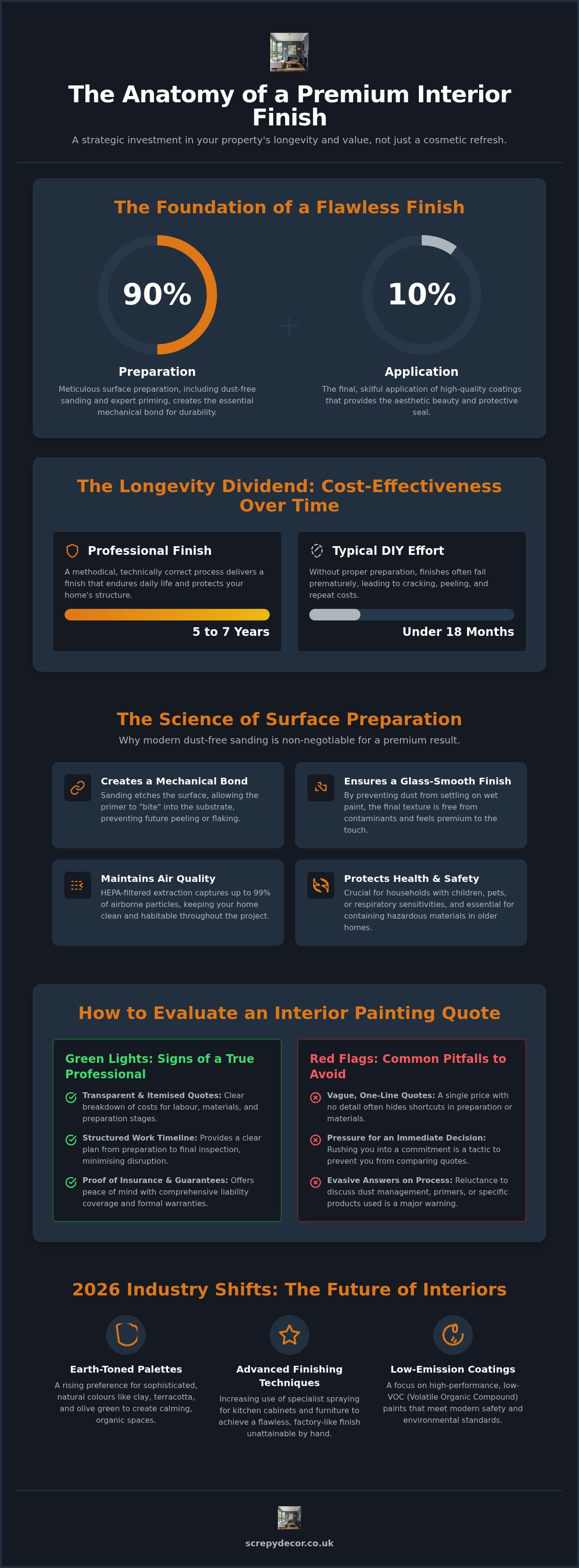
A premium interior finish is 90% preparation and 10% application; the invisible work determines whether your home feels like a luxury showroom or a DIY project gone wrong. You likely understand the frustration of finding a stray paint drip on the carpet or watching fresh paint peel because the surface wasn’t correctly primed. Choosing the right interior painters is about more than just picking a colour from a swatch. It’s about finding a methodical partner who values the discipline of the preparation process as much as the final aesthetic result.
We agree that your home should remain a sanctuary, not a building site, during its transformation. This guide provides the essential framework to help you secure a durable, high-end finish whilst avoiding common pitfalls like vague quotes and invasive dust. You’ll discover how to vet professional painting contractors for transparency and technical skill. We also preview the latest 2026 industry shifts, from the rise of earth-toned palettes like clay and olive green to the importance of low-emission coatings that meet modern safety standards. By the end of this article, you’ll know exactly how to achieve a flawless, long-lasting transformation without the typical stresses of home improvement.
Key Takeaways
- Science of Preparation: Learn why professional surface prep, specifically dust-free sanding with HEPA-filtered extraction, is the essential foundation for a durable, glass-smooth finish.
- Finish Comparison: Understand the technical differences between traditional brush methods and specialist kitchen cabinet spraying to determine the most effective approach for your project.
- Quote Vetting: Discover how to evaluate interior painters by identifying red flags in quotes, ensuring transparent pricing and structured timelines.
- Zero Disruption: Minimise disruption to your daily routine by prioritizing methodical contractors who maintain a clean, organized environment throughout decorating.
- Strategic Investment: Shift your perspective from seeing decorating as a simple cosmetic refresh to viewing it as a strategic investment in your property’s long-term value and structural integrity.
Table of Contents
- Why Hiring Professional Interior Painters is an Investment in Your Property
- The Science of Surface Preparation: Why Dust-Free Sanding Matters
- Comparing Interior Finishes: Traditional Painting vs. Specialist Spraying
- How to Evaluate an Interior Painting Quote: Red Flags and Green Lights
- Achieving a Premium Finish with Screpy Decorators
- Frequently Asked Questions
Why Hiring Professional Interior Painters is an Investment in Your Property
Many homeowners view decorating as a simple cosmetic “refresh”—a quick way to change the colour of a room. However, true professional-grade work is a strategic investment in the structural health of your home. While a DIY effort might look acceptable initially, it often begins to fail within 18 months. Professional interior painters provide a finish that typically lasts 5 to 7 years, making it significantly more cost-effective over a five-year period. This longevity stems from a methodical approach to preparation and the application of high-grade trade coatings that bond permanently to the substrate.
Beyond aesthetics, a professional finish acts as a protective shield for your home’s internal substrates. Plaster, timber, and metal surfaces are susceptible to moisture, UV degradation, and daily wear. By employing advanced painting techniques, expert decorators ensure these materials remain stable and protected. This prevents future damage such as cracking, plaster degradation, or wood rot, which can be expensive to remediate.
There is also a profound psychological impact to consider: living in a space that has been professionally organized, prepared, and painted creates a sense of calm, order, and luxury that a rushed job simply cannot replicate.
| Factor | DIY / Handyman Approach | Professional Decorator Standard |
|---|---|---|
| Expected Lifespan | 12–18 months | 5–7 years |
| Surface Preparation | Manual hand sanding (Dusty) | HEPA-filtered dust-free extraction (99.9%) |
| Material Quality | Retail DIY paint (Low resin density) | Trade-grade polymers (High durability & opacity) |
| Quote Clarity | Vague verbal estimates | Itemized fixed quotes & written guarantee |
| Substrate Care | Surface-level filler | Deep substrate repair & stain sealing |
The Difference Between a Handyman and a Professional Decorator
A handyman might offer a lower day rate, but they often lack the technical knowledge of paint chemistry required for complex interior environments. Professional decorators understand substrate compatibility; they know exactly which primers adhere to specific surfaces (such as shellac-based primers for sap knots or bonding primers for laminate).
They also invest heavily in industrial equipment, such as HEPA extraction systems for dust-free sanding, to guarantee a glass-smooth finish. Choosing professional painting contractors also provides peace of mind through comprehensive insurance policies (£5M Public Liability) and formal warranties—providing tangible protection if issues arise.
Boosting Property Value Through Expert Interior Decorating
First impressions are vital in the UK property market. High-quality interior painting is frequently cited by property survey experts as the home improvement with the highest return on investment (ROI).
If you are preparing a house for resale or the luxury rental market in areas like St Albans or across Hertfordshire, neutralising spaces with sophisticated 2026 palettes (like warm clay, soft sage, or taupe) makes rooms feel larger and brighter. Professional interior painters help you select durable, scrubbable matt emulsions that withstand family life while retaining a pristine, showroom-quality finish.
The Science of Surface Preparation: Why Dust-Free Sanding Matters
Surface preparation is the most critical phase of any decorating project. Many homeowners assume sanding is just about smoothing out bumps, but it is actually about creating a mechanical bond. Professional interior painters use mechanical sanding to key the surface, creating microscopic grooves that allow primers and topcoats to “bite” into the substrate. Without this step, even the most expensive paint tin will eventually flake or peel.
[1. Deep Wash & Degrease] ➔ [2. Mechanical HEPA Sanding] ➔ [3. Stain & Primer Sealing] ➔ [4. Elastomeric Fill & Caulk] ➔ [5. Precision Topcoats]Modern dust-free technology has transformed this process. Industrial dust-free sanding utilizes HEPA-filtered extraction systems (such as Mirka and Festool equipment) to capture up to 99.9% of airborne dust particles at the sanding pad.
Why HEPA Dust Extraction is Essential:
- Flawless Finish: Traditional sanding leaves fine plaster grit that floats in the air and settles into fresh, wet paint, ruining the texture. Dust extraction keeps the air completely clear.
- Health & Safety: Eliminates the “decorating fog” containing silica and fine plaster dust, protecting children, pets, and individuals with asthma or respiratory sensitivities.
- Zero Cleanup Stress: Keeps your furniture, carpets, and air conditioning units free from fine debris. Read more in our guide to dust-free sanding benefits.
Our Methodical Approach to Wall Preparation
We don’t just sand; we diagnose. Our team identifies surface defects like flashing (where filler patches show through paint sheens) or mapping (where uneven textures show under light). We apply specialist stain-blocking primers like Zinsser B-I-N to seal water stains, sap knots, or nicotine. If your walls suffer from damp or black mould spots, review our expert guide on how to treat and paint over mould in UK homes.
Protecting Your Home During the Decorating Process
Methodical experts treat your property with complete respect. We employ precision masking tapes to guarantee razor-sharp lines and protect light switches, sockets, and architraves. Heavy-duty floor protection, plastic sheeting, and sealable work zones ensure the rest of your home remains clean, safe, and fully accessible throughout the project.
Comparing Interior Finishes: Traditional Painting vs. Specialist Spraying
Choosing between traditional application and modern spraying depends entirely on the architectural context of your property.
| Feature | Traditional Brush & Roller | Specialist HVLP / Airless Spraying |
|---|---|---|
| Best Suited For | Period plaster, ornate cornices & skirtings | Kitchen cabinets, woodwork, doors & open spaces |
| Application Method | Hand application | High-volume atomized lacquer spray |
| Surface Finish | Subtle natural brush texture | Factory-smooth, zero brush marks |
| Durability / Coating | Breathable emulsions & eggshells | Ultra-durable 2-pack polyurethane lacquers |
Professional interior painters often recommend traditional brush and roller techniques for period homes with textured lime plaster or historic detailed cornicing. Hand application allows the decorator to work paint into uneven surfaces where spray might shadow. Conversely, high-volume low-pressure (HVLP) spraying delivers an ultra-smooth, factory-level coating impossible to replicate by hand on flat surfaces like doors or cabinetry.
Kitchen Cabinet Spraying: A High-End Refinish
Specialist kitchen cabinet painting has emerged as the modern alternative to a costly kitchen replacement. Replacing a quality kitchen in the UK typically costs £15,000 to £30,000+. Refinishing existing solid oak, MDF, or laminate units with professional spray lacquers costs £1,200 to £3,500—saving up to 80%.
Our spray refinishing process begins with deep degreasing, mechanical keying, and applying high-adhesion primers (Zinsser BIN / Tikkurila Otex). We then apply 2-pack polyurethane topcoats tinted to any shade from Farrow & Ball, Little Greene, or Dulux Heritage. Read our detailed comparison of kitchen spraying vs vinyl wrapping.
The Art of Professional Wallpaper Hanging
Installing luxury wallpapers from design houses like Farrow & Ball, William Morris, or Cole & Son requires master precision. Our wallpaper hanging service prepares walls with high-grade lining paper to absorb minor wall defects. Handling delicate materials like silk, grasscloth, or wide-width vinyl requires precise adhesive selection and pattern matching. Calculate your room requirements with our wallpaper calculator guide.
How to Evaluate an Interior Painting Quote: Red Flags and Green Lights
Evaluating a quote from interior painters requires a critical eye for detail rather than simply accepting the lowest price. A vague one-page estimate stating “paint walls and ceilings” is a major warning sign.
| Quote Type | Sample Specification | Diagnostic Outcome |
|---|---|---|
| ❌ Red Flag Quote | “Decorate hallway and 2 bedrooms - £800 total. Paint supplied by builder.” | Missing prep scope, no brand, no warranty, high risk of peeling. |
| ✅ Green Light Quote | “Itemized: Mechanical HEPA sanding of walls & trim. Apply Zinsser BIN to stains. 2 coats Dulux Trade Diamond Matt. Supply RAMS & insurance. Fixed Price: £1,850.” | Full transparency, trade materials, HEPA dustless prep, legal warranty. |
Key Checklist for Evaluating Decorating Quotes:
- Detailed Scope of Prep: Does the quote explicitly outline sanding equipment, crack filling, and stain sealing?
- Material Transparency: Does it state exact paint brands and grades (e.g. Dulux Trade Diamond Matt or Little Greene Intelligent Matt) rather than generic “emulsion”?
- Labour & Timeline Breakdown: Is there a clear timeline separating surface preparation days from topcoat application?
- Insurance & Compliance: Does the contractor hold £5M Public Liability Insurance and provide site-specific Risk Assessments and Method Statements (RAMS)?
- Formal Snagging & Guarantee: Is there a final walkthrough inspection before final payment, backed by a written warranty?
For a transparent cost breakdown tailored to your home, check our UK Decorating Price Guide or use our interactive Quote Calculator.
Achieving a Premium Finish with Screpy Decorators
A flawless home transformation requires a partner who treats the discipline of the process with the same respect as the final aesthetic result. At Screpy Decorators, we bridge the gap between traditional trade craftsmanship and modern dust-free technology.
The Screpy Decorators Standard
Whether you require a single-room refresh, full house decorating, commercial decorators for offices or retail units, or specialist period property decorating, our experienced team manages every detail with precision.
Frequently Asked Questions
How long does it typically take to paint a standard-sized room?
A standard double bedroom takes approximately 1.5 to 2.5 days to complete to a professional trade standard. This timeline accounts for surface filling, dust-free sanding, primer curing, and applying two full coats of durable emulsion with proper drying intervals.
Do I need to move all my furniture before the interior painters arrive?
You should remove small breakables, ornaments, and electronics. Our team will carefully move larger furniture (such as sofas or wardrobes) to the centre of the room, wrapping them in heavy-duty protective sheeting and protecting all flooring.
What is the best paint finish for high-traffic areas like hallways?
We strongly recommend high-durability acrylic eggshell or “scrubbable matt” emulsions (such as Dulux Trade Diamond Matt, Crown Clean Extreme, or Little Greene Intelligent Matt). These coatings allow scuffs and dirt marks to be easily wiped away without polishing or damaging the paint film.
Is dust-free sanding really worth the extra effort?
Yes, absolutely. Dust-free sanding is essential for achieving a showroom finish. By extracting 99.9% of dust at the sanding pad, fine plaster grit cannot float into fresh paint or settle inside your carpets, furniture, and HVAC systems.
Can you spray paint kitchen cabinets that are already painted?
Yes. Previously painted or lacquered cabinets can be spray-painted provided they are thoroughly degreased, mechanically sanded, and primed with high-adhesion chemical bonding primers before applying topcoats.
How do I know if my walls need plastering or just professional decorating prep?
Professional preparation can resolve hairline cracks, minor dents, and surface roughness using elastomeric fillers and HEPA sanding. However, if plaster is “blown” (hollow-sounding or crumbling away from brickwork), a plasterer may be required before decorating begins.
Do you provide a guarantee for your interior painting work?
Yes, Screpy Decorators provides a comprehensive written guarantee on all workmanship and materials applied according to manufacturer specifications.
Ready to Transform Your Home?
Experience a clean, methodical, and high-end decorating service across St Albans, Welwyn Garden City, Harpenden, and Hertfordshire.
- 📞 Speak with our estimator: 07930 097259
- 💬 Get an instant price estimate: Try our Online Quote Calculator
- 📧 Schedule a free site survey: Contact Screpy Decorators Today
About the Author: Screpy Decorators
Screpy Decorators publishes practical guidance on preparation, paint systems, wallpaper calculations, and planning decorating work in Hertfordshire.
Planning a Decorating Project?
Get a precise, itemized written quotation for your home or business premises in Welwyn Garden City, Hatfield, or St Albans.